Porphyromonas endodontalis
Gram statusGram-negative
LPS / LOSYes
Periodontal pathogenYes
ANALYTICAL PERFORMANCE
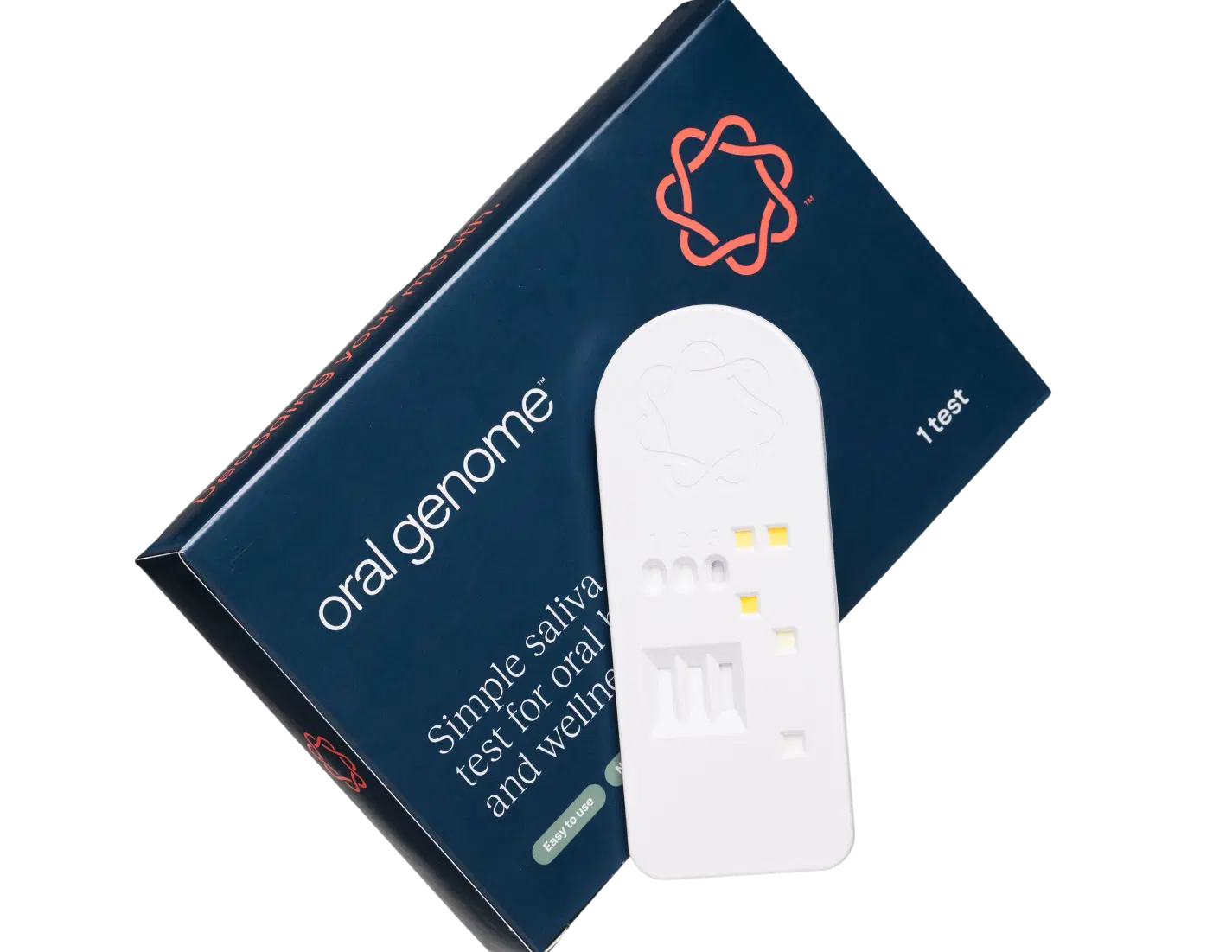
Cross-Reactivity Evaluation of the Oral Genome P. gingivalis Lateral Flow Assay
The assay was challenged with a panel of closely related periodontal pathogens to confirm that a positive result reflects P. gingivalis — and not look-alike bacteria found in the same oral environment.
HEADLINE RESULT
Against every related pathogen tested, up to 1×10⁷ CFU/mL in a saliva matrix.
Confirms the assay is specific to the intended target.
4
Related pathogens challenged
0
Clinically significant cross-reactions
107
Highest challenge concentration
6x
Replicates per condition
WHAT THIS MEANS
Saliva is a crowded environment. Dozens of bacterial species live alongside Porphyromonas gingivalis, a keystone pathogen in periodontal disease — and several of them share similar surface structures. A trustworthy test has to tell them apart.
Analytical specificity measures exactly that: whether the test reacts only to its intended target, even when closely related organisms are present at high concentrations. Strong specificity means fewer false positives and greater confidence in every result a clinician acts on.
STUDY DESIGN
The panel was deliberately chosen for difficulty: closely related Gram-negative anaerobic periodontal pathogens with lipopolysaccharide (LPS) or surface-antigen similarity to P. gingivalis — the organisms most likely to trigger a false signal.
Porphyromonas endodontalis
Prevotella intermedia
Tannerella forsythia
Treponema denticola
| Organism | Gram status | LPS / LOS | Periodontal pathogen |
|---|---|---|---|
| Porphyromonas endodontalis | Gram-negative | Yes | Yes |
| Prevotella intermedia | Gram-negative | Yes | Yes |
| Tannerella forsythia | Gram-negative | Yes (atypical) | Yes |
| Treponema denticola | Spirochete (Gram-negative-like) | LOS/LPS-like | Yes |
Saliva matrix
Each organism was spiked into pooled negative saliva to reflect real sample conditions.
3 concentrations
High 1×10⁷, medium 1×10⁶, and low 1×10⁵ CFU/mL — up to supraphysiologic loads.
Full controls
P. gingivalis positive controls across the same range and negative saliva controls, all in six replicates.
Test-organism concentrations were standardized by optical-density measurement against a reference calibration. Study conducted at an independent third-party laboratory.
RESULTS
The P. gingivalis positive controls produced clear, concentration-dependent signal. None of the related pathogens produced a clinically significant test line at the concentrations evaluated.
Prevotella intermedia
Tested to 1×10⁷ CFU/mL
Tannerella forsythia
Tested to 1×10⁷ CFU/mL
Treponema denticola
Tested to 1×10⁷ CFU/mL
Porphyromonas endodontalis
Tested to 1×10⁶ CFU/mL
CONCLUSION
No analytical cross-reactivity was observed for the related periodontal pathogens tested, up to the concentrations below.
Cross-reactant
Prevotella intermedia
No cross-reactivity up to
1×10⁷ CFU/mL
Cross-reactant
Treponema denticola
No cross-reactivity up to
1×10⁷ CFU/mL
Cross-reactant
Tannerella forsythia
No cross-reactivity up to
1×10⁷ CFU/mL
Cross-reactant
Porphyromonas endodontalis
No cross-reactivity up to
1×10⁶ CFU/mL
| Cross-reactant | No cross-reactivity up to |
|---|---|
| Prevotella intermedia | 1×10⁷ CFU/mL |
| Treponema denticola | 1×10⁷ CFU/mL |
| Tannerella forsythia | 1×10⁷ CFU/mL |
| Porphyromonas endodontalis | 1×10⁶ CFU/mL |